
Oklahoma Ban Increases Pressure on US Sweepstakes Casinos
Oklahoma's upcoming ban on dual-currency sweepstakes casinos increases nationwide pressure on the industry, as multiple states implement stricter regulations, enforcement actions, and legal crackdowns.

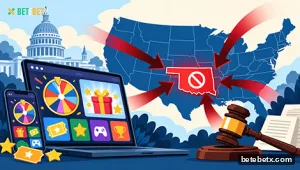
Starting November 1, 2026, Oklahoma will become the newest state to implement stricter controls on dual-currency sweepstakes casinos.
This upcoming regulation builds upon a broader state-level crackdown gaining momentum over the last two years. Already, jurisdictions like California, Connecticut, Indiana, Louisiana, Maine, Montana, New Jersey, New York, and Tennessee have enacted specific legislation aimed at this industry.
Meanwhile, states such as Michigan, Nevada, Idaho, and Washington have limited sweepstakes casino operations through enforcement actions or existing gambling statutes rather than passing new bills.
Consequently, navigating the market has grown significantly more complicated than it was just a year ago. Availability varies widely depending on the state, making the distinction between a standard social casino and a sweepstakes platform critical, since legal scrutiny primarily targets the dual-currency structure.
What States Are Actually Targeting
Typically, sweepstakes casinos feature casino-style games—predominantly slots—utilizing two distinct types of virtual currency.
The first kind is commonly referred to as Gold Coins. These are purely entertainment-based credits carrying no cash value and intended exclusively for play-money gaming.
The second type is generally known as Sweeps Coins, Sweeps Cash, or a similar alternative. These are used during promotional gaming sessions and can potentially be exchanged for cash prizes, provided local laws and platform terms permit it.
To acquire them, many operators bundle Sweeps Coins as a promotional bonus when players purchase Gold Coin packages. Alternatively, Sweeps Coins can often be obtained via free-entry avenues, including daily log-in bonuses, social media promotions, or mail-in requests.
It is this exact dual-currency framework that differentiates sweepstakes casinos from traditional social casinos.
Conventional social casinos rely entirely on play-money currency. While players might still earn achievements, leaderboard rewards, or bonuses, no redeemable sweepstakes currency is linked to the gaming experience.
Certain platforms provide both formats, utilizing geolocation technology to decide which gameplay mode is permissible in a given state.
One illustration of an online sweepstakes platform leveraging this dual-currency method is ACE.com, which supplies Gold Coins for social entertainment alongside Sweeps Coins designated for promotional gaming in approved regions.
Why the Legal Picture Is So Confusing
The core challenge for players stems from the lack of a uniform approach among states.
While some have adopted tailored laws specifically targeting sweepstakes operators, others depend entirely on pre-existing gambling statutes. Furthermore, attorneys general and regulators can issue cease-and-desist orders or initiate enforcement without waiting for legislators to pass a fresh bill.
Additionally, platforms may choose to withdraw from certain areas voluntarily.
As a result, a specific casino might be inaccessible in a state even if no official statutory ban has been enacted there.
As of October 2026, nine states maintain active laws prohibiting or restricting dual-currency sweepstakes casinos:
- California
- Connecticut
- Indiana
- Louisiana
- Maine
- Montana
- New Jersey
- New York
- Tennessee
Oklahoma is scheduled to join this list on November 1.
In states like Washington, Idaho, Michigan, and Nevada, pre-existing laws or active enforcement have already rendered the operational model extremely difficult or unfeasible.
Florida Shows That Enforcement Is Still Expanding
Regulatory pressure extends well beyond territories that have adopted dedicated legislation.
Florida exemplifies enforcement-driven initiatives, highlighted by the state attorney general filing lawsuits against prominent sweepstakes casino operators throughout 2026.
This demonstrates that the sector continues to encounter rigorous scrutiny, even in jurisdictions utilizing alternative legal pathways.
Ultimately, a state does not require a brand-new, sweepstakes-specific statute to pressure operators into modifying their practices or exiting the market entirely.
For users, the practical outcome remains identical: access can vanish abruptly, meaning a platform accessible today might not remain available tomorrow.
The Games Still Look Familiar
Despite the complex legal landscape, the gameplay on sweepstakes platforms remains straightforward for the most part.
Slot machines anchor the majority of these game libraries.
Certain websites feature uncomplicated three-reel configurations complete with classic layouts and fruit symbols, whereas others host advanced titles equipped with expanding reels, multi-thousand paylines, multipliers, bonus rounds, or progressive jackpots.
The overall user experience differs notably from one operator to another.
Historically, numerous sweepstakes casinos featured adaptations of titles designed by major real-money gaming suppliers. Lately, however, several prominent developers have distanced themselves from the sweepstakes sector, compelling platforms to lean more heavily on proprietary titles or content engineered specifically for social and sweepstakes environments.
This shift has resulted in uneven game selections.
While one site may mirror a traditional online slot parlor, another might emphasize daily rewards, social mechanics, and exclusive proprietary games.
Social Casinos May Face Less Pressure
As state-level interventions persist, the boundary separating social gaming from sweepstakes play will likely grow even more significant.
Traditional social casinos abstain from providing redeemable Sweeps Coins, thereby eliminating the primary feature that regulators target when challenging the sweepstakes format.
Although this does not shield social gaming from all forms of legal evaluation, it generally avoids the specific regulatory complications associated with systems where promotional currency can be traded for prizes.
Consequently, operators already running dual formats are positioned more advantageously to pivot should additional states limit Sweeps Coin mechanics.
Within regions where redeemable models are barred, these companies can sustain operations by offering exclusive Gold Coin social gameplay.
What the Crackdown Means for Players
For consumers, eligibility represents the most immediate hurdle.
Access to a particular casino relies not merely on a user’s permanent residence, but frequently on their precise physical location when logging in or requesting a prize redemption.
To verify user locations, operators routinely employ device-location tools and IP tracking.
Age restrictions also lack uniformity, as certain platforms permit users aged 18 and older, while others mandate a minimum age of 21 regardless of state lines.
Consequently, players must verify the individual terms of each platform rather than assuming uniform policies across the sweepstakes industry.
Redemption guidelines also diverge widely.
Payout processing speeds, verification protocols, playthrough conditions, and minimum account balances fluctuate considerably among different operators.
The Market Is Entering a Different Phase
Fuelled by high accessibility and operation outside conventional state-licensed frameworks, sweepstakes casinos experienced rapid expansion between 2020 and 2025.
Maintaining that level of growth has grown increasingly difficult as a greater number of states implement restrictive measures.
Consequently, the market is projected to expand at a more measured pace, shifting focus away from aggressive geographic expansion.
Instead, operators may prioritize retention strategies, proprietary software, social elements, and servicing established user bases within states where the model remains permissible.
For users, this environment could translate into fewer prominent sign-up incentives, replaced by a greater focus on ongoing loyalty rewards, usability, and game variety.
Although Oklahoma’s November 1 restriction marks the next major milestone, it will certainly not be the final one.
The overarching trajectory is evident: the US sweepstakes casino landscape is transitioning away from unchecked growth toward an era defined by localized enforcement, state regulations, and restricted market availability.
A clear comprehension of how Gold Coins, Sweeps Coins, and social-only formats differ is increasingly vital, as these distinctions dictate not only how a platform functions, but whether it is legally permitted to operate within a given state.
Frequently Asked Questions
When does Oklahoma’s new sweepstakes casino law take effect?
Oklahoma’s new law restricting dual-currency sweepstakes casinos takes effect on November 1, 2026.
What is the difference between Gold Coins and Sweeps Coins?
Gold Coins are play-money credits used strictly for entertainment with no cash value. Sweeps Coins are used in promotional gameplay and may be redeemable for cash prizes where permitted by the platform and local rules.
Which states have banned or restricted dual-currency sweepstakes casinos through specific laws?
As of October 2026, nine states have laws in force: California, Connecticut, Indiana, Louisiana, Maine, Montana, New Jersey, New York, and Tennessee, with Oklahoma joining on November 1.
Are traditional social casinos affected by these crackdowns?
Traditional social casinos use only play-money currency without redeemable Sweeps Coins, meaning they generally face less regulatory pressure than dual-currency sweepstakes platforms.
Keep reading
Canada Implements Stricter Regulations on Sports Betting Markets
Canada’s investment regulator has tightened prediction market regulations by explicitly banning sports and entertainment contracts, while mandating that authorized brokers…

Cloudbet Launches Fearshot in New Casino Venture
Cloudbet has launched Fearshot: Phantom Mansion, an arcade-themed ghost-hunting casino game developed by Joy Studios that integrates real-money stakes directly…

Italy Establishes Strict Traceability Mandates for Online Gaming
Italy's Customs and Monopolies Agency has issued strict new regulations for licensed remote gaming operators, mandating complete financial traceability for…